“They all look good online. How do I choose?” I hear a version of that question almost every week, and it usually comes from a buyer who has spent a Saturday night scrolling listing photos in four different neighborhoods and landed nowhere. I’m Maureen Moran, REALTOR® and Seller Representative Specialist (SRS) with @properties Christie’s International Real Estate, and I’ve spent 30 years helping Chicago buyers separate the online version of a neighborhood from the lived-in version. So let’s get clarity on Lincoln Park vs. Lakeview vs. Bucktown vs. Wicker Park and figure out which one actually fits your life, not just your feed.
Why This Comparison Comes Up So Often
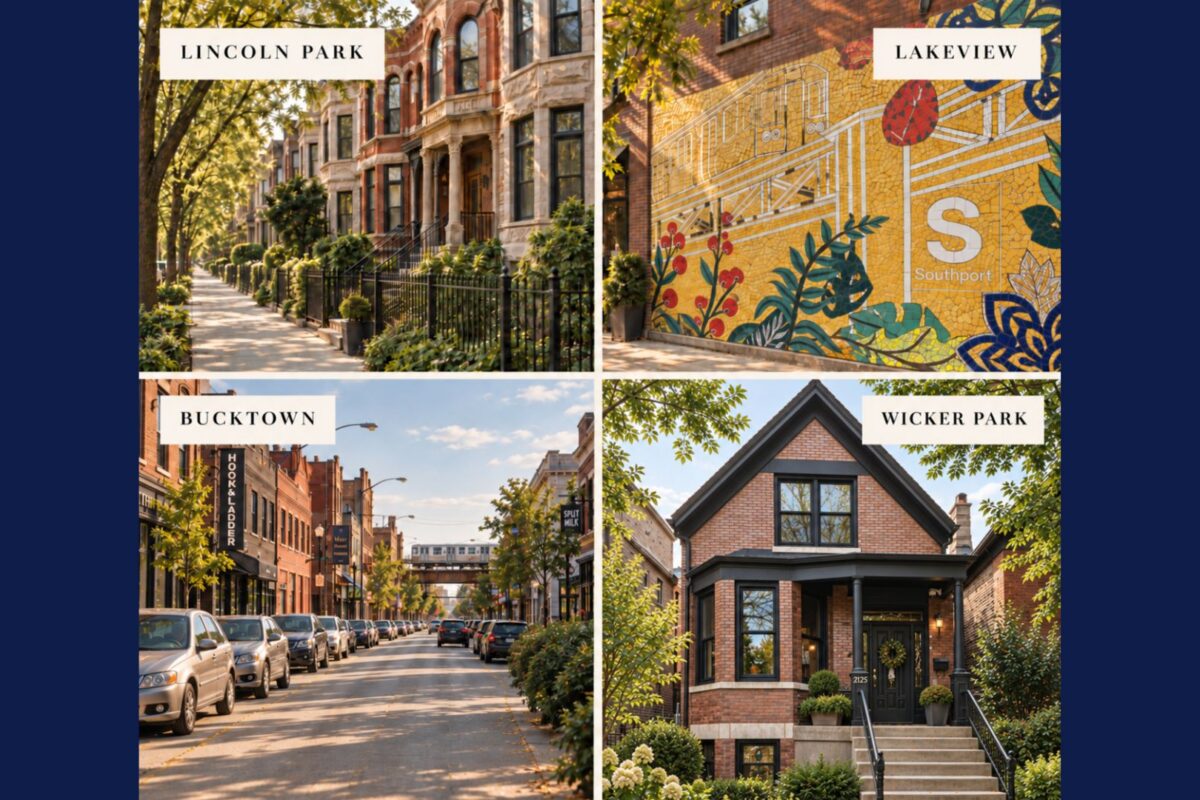
These four neighborhoods sit within a few miles of each other on Chicago’s Near North Side, and on paper they can look interchangeable: tree-lined streets, great architecture, and a variety of restaurants. Buyers compare them constantly online, weighing walkability, transit, restaurants, and general vibe. But a neighborhood isn’t a spec sheet. It’s how you’ll actually spend your Tuesday nights and your Sunday mornings. That’s a values question, not a listing-photo question.
Lincoln Park: Established, Walkable, Close to Lake Michigan
Lincoln Park has some of the highest walkability scores in the city, generally landing in the low-to-mid 90s on Walk Score’s Lincoln Park data. It’s home to the park itself, the zoo, DePaul University, and a mix of single family homes, walk-ups, and high-rises. This is the neighborhood I see people new to Chicago gravitate toward – a well known spot within walking distance to the lakefront, the Gold Coast shopping, and even the Loop; Lincoln Park fits the bill these things matter more than density.
- Best for: those new to Chicago, buyers prioritizing running or biking along the lake / green space, shopping and restaurants or DePaul University, as well as move-up buyers who want to stay in the city and enjoy easy access to museums, the harbors and an affordable view of downtown or Lake Michigan.
- Trade-off: often a premium price point compared to the other three
For a real read on what’s actually moving in Lincoln Park right now, not a national headline, take a look at this month’s Lincoln Park market data.
Lakeview: The Middle Ground
Lakeview sits just north of Lincoln Park and offers a similar walkability profile, generally in the low 90s. It’s a genuine mix of greystones, single-family homes and everything from 2-flats to courtyard buildings and high rises from Wrigleyville and Southport Corridor to East Lakeview and Roscoe Village, and a strong rental market that keeps inventory turning over. Lakeview tends to give buyers more house or more condo for the dollar than Lincoln Park, without giving up much on walkability or transit access to the Brown and Red Lines. Also, you’ve got to love baseball or not mind traffic. With 81 regular season games, of which 35-40 are night games, Wrigley keeps the neighborhood jumping.
- Best for: buyers who want Lincoln Park’s walkability without Lincoln Park’s price point
- Trade-off: density is high, especially in East Lakeview so parking is at a premium and traffic can pile up. If you ask nice, I’ll tell you my shortcuts 😉
Bucktown: Design-Forward and Transitional
Bucktown carries walkability scores in a similar range, often cited in the low-to-mid 90s, and it has become known for its mix of new and modern/transitional construction, gut-rehabbed vintage homes, and a design-forward retail and dining scene along Damen and North Avenue. Bucktown tends to attract buyers who want a neighborhood that feels a little more curated while maintaining a lot of history.
- Best for: buyers who want newer construction options and a strong design aesthetic without leaving the North Side – also great for those who want an easy to commute by expressway, metra or blue line
- Trade-off: less green space than Lincoln Park – though the 606 is an anchor for the area, and pricing has climbed significantly over the past decade
Wicker Park: Highest Walkability, Most Energy
Wicker Park consistently posts some of the highest walkability numbers of the four, often in the mid-90s, and it has the densest concentration of independent restaurants, music venues, and retail. It’s the neighborhood I point buyers toward when nightlife, culture, and a shorter commute downtown outweigh the desire for a big backyard.
- Best for: buyers prioritizing walkability, culture, and transit access above all else
- Trade-off: less inventory of large single-family homes compared to the other neighborhoods
The Real Question Isn’t Which Neighborhood Is “Best”
I want to be direct with you here, the way I am with my own clients: there is no universally answer to this comparison. There’s only the answer that’s fits how you actually live. I always play a bit of devil’s advocate at this stage, because if you’re about to put a significant amount of money into a home, you need to really love where you’re putting it. So I’ll ask questions like: How are you actually going to use your weekends? Do you need to walk to a train, or do you need a garage? Is a longer commute worth more square footage and more green space?
The kernel of it is this: living in a neighborhood and visiting a neighborhood are two different things. Full stop. A great Saturday afternoon in a neighborhood doesn’t tell you what a Tuesday commute or a February grocery run will feel like. That’s why I encourage every buyer to walk the actual blocks, eat at the actual restaurants, and try the actual commute before they fall in love with a listing.
If you’re weighing a pre-market opportunity in any of these neighborhoods, my Private to Prominent strategy can also give you a head start, connecting you to homes before they hit the open market.
Which Chicago neighborhood has the best walkability: Lincoln Park, Lakeview, Bucktown, or Wicker Park?
Wicker Park generally has the highest walkability score of the four (the blue line at Division and easy access to the expressway; plus the restaurants and shops on Division are big factors), often landing in the mid-90s on Walk Score, followed closely by Lincoln Park, Bucktown, and Lakeview, all of which sit in the low-to-mid 90s. All four are considered highly walkable by Chicago standards, so the practical difference between them often comes down to specific block location rather than the neighborhood as a whole.
How do I know which neighborhood actually fits my lifestyle instead of just looking good online?
The most reliable way is to test your actual routine in the neighborhood before you commit: walk it at the time of day you’d normally be out, try the commute you’d actually take to work, and eat at a restaurant on a weeknight, not just a Saturday. A neighborhood you visit and a neighborhood you live in are two different experiences, and preparing for that difference upfront protects you from regret later.
Are prices significantly different between these four neighborhoods?
Yes, pricing varies meaningfully by neighborhood and even block, with Lincoln Park generally commanding a premium and Lakeview often offering more value for comparable square footage. Because these numbers shift monthly, I recommend looking at current showing activity and days-on-market data rather than relying on general reputation alone.
Can I get access to homes in these neighborhoods before they’re publicly listed?
Yes, through pre-market strategies like my Private to Prominent program, qualified buyers can sometimes see and tour homes before they hit the open MLS. This isn’t available for every property, but it’s worth asking about early in your search if timing and privacy matter to you.
Let’s Find the Right Fit, Not Just the Right Listing
Clarity comes first. Commitment comes first and clarity follows. If you’re trying to decide between Lincoln Park, Lakeview, Bucktown, and Wicker Park, I’d rather walk the blocks with you and ask the hard questions than let you guess from a screen. Send me a message, and I’ll give you the straight answer about which of these neighborhoods actually fits the life you’re living, not just the one you’re picturing.