
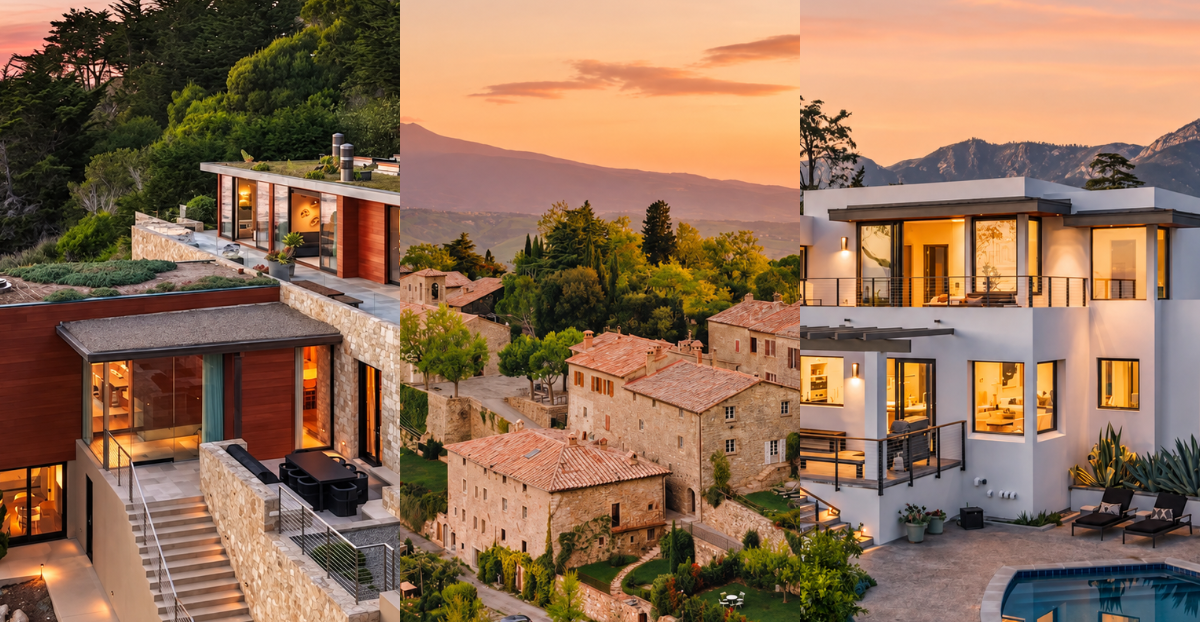
A note on transparency: I’m a Pacaso referral partner. If you buy a Pacaso share after I refer you, Pacaso pays me a referral commission and a small equity award. That doesn’t change my advice. The right choice depends on how you want to live, and sometimes the answer is to keep renting.
I get some version of this question almost every fall, and it usually comes from a client who is entering a different season of life.
Maybe the kids are finally old enough that travel feels easier. Maybe the youngest just left for college. Maybe retirement is close enough that you can start picturing how you actually want to spend your time.
And somewhere in that transition, the question comes up:
Should we buy a second home?
It sounds like a real estate question, but I don’t think it starts there.
The better question is:
What do you want a second home to do for your life?
Do you want a place where generations of your family and close friends can gather year after year?
Are you picturing skiing together in Park City, spending a week at the beach, boating, escaping somewhere warm in the winter, or returning to a favorite destination for a few meaningful weeks each year?
Those are very different versions of second-home ownership.
And increasingly, they don’t require the same kind of purchase.
The Old Math on Second Homes Was Never Quite as Simple as It Looked
A traditional second home can be expensive in ways that don’t show up on the listing sheet.
You pay for the property whether you are there or not.
Utilities keep running. Landscaping still needs attention. Things break. Taxes and insurance keep coming. A roof ages whether you use the house 300 days a year or 30.
And somebody has to manage all of it.
If that somebody is you, calling a property manager from Chicago because something went wrong while you were away, the experience can start feeling less like a vacation home and more like another responsibility.
That doesn’t make owning a second home a bad idea.
For some families, it is exactly the right idea.
But I do think people sometimes fall in love with the house before they think through how they will actually use it.
What Kind of Second-Home Buyer Are You?
Before I would start looking at properties with a client, I’d want to understand the life they’re trying to create.
I tend to think about second-home buyers in three broad groups.
1. The Family Gathering Buyer
This buyer wants a place that becomes part of the family.
Maybe it’s a beach house where everyone comes together every summer.
Maybe it’s a ski home where children and grandchildren gather over winter break.
Maybe it becomes the place for birthdays, holidays, long weekends and traditions that repeat year after year.
For this buyer, the home is not simply somewhere to stay.
It is a place where generations come together.
If the plan is to use it often, host extended family and friends, and build long-term traditions around one place, owning the whole property may make a lot of sense.
2. The Destination-Experience Buyer
This buyer wants something a little different.
Maybe the family loves to ski and wants several weeks a year in Park City.
Maybe they want a beach home where children, grandchildren, siblings or close friends can gather.
Maybe boating is the draw. Or warm weather in February. Or Napa. Or Cabo.
The purpose of the home is still deeply personal.
It is still about bringing people together.
But the usage pattern is different.
These are more likely to be planned destination vacations — intentional stretches of time where everyone gathers in one place.
If you only need that property for several meaningful weeks each year, owning 100% of it may not be the only way to accomplish what you want.
3. The Traveler
Then there is the family that genuinely loves variety.
They want Italy one year, Colorado the next, a beach vacation after that.
They may love beautiful homes and wonderful experiences but have no desire to return to the same property again and again.
For that buyer, ownership of any kind may not make sense.
Renting may still be the smartest answer.
That’s why I don’t believe there is a universal “best” way to own a vacation home.
It depends entirely on the experience you are trying to create.
Co-Ownership Has Changed
Sharing a vacation property isn’t a new idea.
Families have bought cottages together for generations. Friends have formed LLCs. Siblings have inherited homes and then tried to figure out who gets which week.
The challenge has always been structure.
Who pays for what?
Who gets which weeks?
Who handles maintenance?
What happens when one owner wants out?
Companies such as Pacaso have taken that old idea and turned it into a professionally managed model.
Instead of buying an entire vacation home, buyers can purchase an ownership interest in a specific property while much of the management and maintenance is handled for them.
That changes the proposition.
You are no longer necessarily asking:
Can I afford this entire vacation home?
You may instead be asking:
How much of this home do I actually need to own?
And No, Pacaso Is Not Structured Like a Traditional Timeshare
This is one of the first questions people ask, and understandably so.
Pacaso is structured as real estate co-ownership rather than the traditional timeshare model most people are familiar with.
With Pacaso, you purchase an ownership interest connected to a specific property rather than simply buying the right to use a resort for a predetermined week.
Owners reserve stays through a scheduling system rather than automatically owning the same week every year.
That gives owners flexibility.
But it also leads to one of the biggest questions you need to ask yourself.
How Much Control Do You Want?
Whole-home ownership gives you something co-ownership cannot:
complete control over the calendar.
If you own the entire property, you decide when you use it, who stays there and how long they stay.
With a shared property, scheduling matters.
For some people, that feels like a very reasonable tradeoff.
They would rather own part of an exceptional home, have the management handled and use it intentionally several times each year than carry the cost and responsibility of owning the entire property.
Other buyers will hate the idea of checking a calendar.
They want the home available whenever they want it.
That is useful information about yourself — and I would want to know it before you bought anything.
What Co-Ownership Solves
For the right buyer, professionally managed co-ownership can address two of the biggest obstacles to owning a destination home:
capital and management.
Instead of purchasing the entire property, you purchase a portion of it.
Much of the property management is also handled for you.
That can make it possible to own in a destination — and potentially at a quality level — that might not make sense if you were purchasing the entire home.
But there is another side to that.
I Would Look at This as a Lifestyle Purchase First
I would not buy a co-owned vacation home because I expected it to appreciate at the same rate as the broader residential market.
Could the value of your ownership interest rise?
Yes.
But I would be conservative about that assumption.
A fractional interest is a different product from owning an entire home, with a different pool of potential buyers.
So while the value may increase over time, I would not assume it will rise at the same rate as a comparable whole-home property or the surrounding housing market.
For me, that means the purchase should work first as a lifestyle decision.
You are buying access to a particular kind of life:
- a beautiful home in a place your family loves,
- time together,
- professional management,
- and the ability to put less capital into the property than you would if you bought the entire thing.
If appreciation comes with it, wonderful.
I just wouldn’t make that the primary reason to buy.
There Are Still Costs
Professionally managed does not mean free.
Owners still pay their share of the property’s operating expenses, and those expenses can change over time.
And, as with any substantial real estate decision, I would want a buyer to talk with the appropriate financial and tax professionals about how the purchase fits into the rest of their financial life.
This is where I think it is especially important not to get distracted by the beautiful house.
The house has to fit the plan.
What Happens If You Want to Sell?
This is another place where co-ownership is different from a traditional whole-home sale.
An owner may be able to sell their ownership interest separately rather than waiting for the entire property to be sold.
But the buyer pool, use pattern and resale process are different from selling a whole home.
Again, I would look at it through the same lens:
This is real estate, but it is a different kind of real estate.
So Is a Vacation Home Worth It?
Sometimes absolutely.
But I don’t think the answer comes from a spreadsheet alone.
A ski home that brings your children and grandchildren together every winter may have a value that isn’t captured entirely by an appreciation calculation.
A beach home where extended family and friends gather year after year may become part of the family story.
And a co-owned destination home may give a family exactly the experience they wanted without requiring them to purchase and maintain an entire luxury property.
The decision becomes much clearer once you stop asking:
“Is a vacation home worth it?”
and start asking:
“What kind of second-home owner do I actually want to be?”
Start With the Life, Then Choose the Real Estate
If you are thinking about a second home, I would start here:
- How often will we realistically use it?
- Do we want spontaneous access or planned destination trips?
- Do we want this to become a family gathering place across generations?
- How much responsibility do we actually want?
- How much capital do we want tied up in the property?
- What do we want owning this home to make possible for our family and friends?
Those answers may lead you to whole-home ownership.
They may lead you to co-ownership in Park City, Cabo, Napa or another destination.
Or they may tell you that renting beautiful homes wherever you want to travel is still the better fit.
All three can be sensible choices.
The important part is matching the real estate to the life you actually want to live.
Curious What Co-Ownership Actually Looks Like?
If the idea of owning a vacation home appeals to you but owning the entire property doesn’t, take a look at what is currently available through Pacaso.
Browse Current Pacaso Vacation Homes →
Referral link. I’m compensated if you purchase through my referral.
And if you’re trying to decide between whole-home ownership, co-ownership or simply continuing to rent when you travel, I’m happy to help you think through the tradeoffs and determine which option fits the way you actually want to live.