
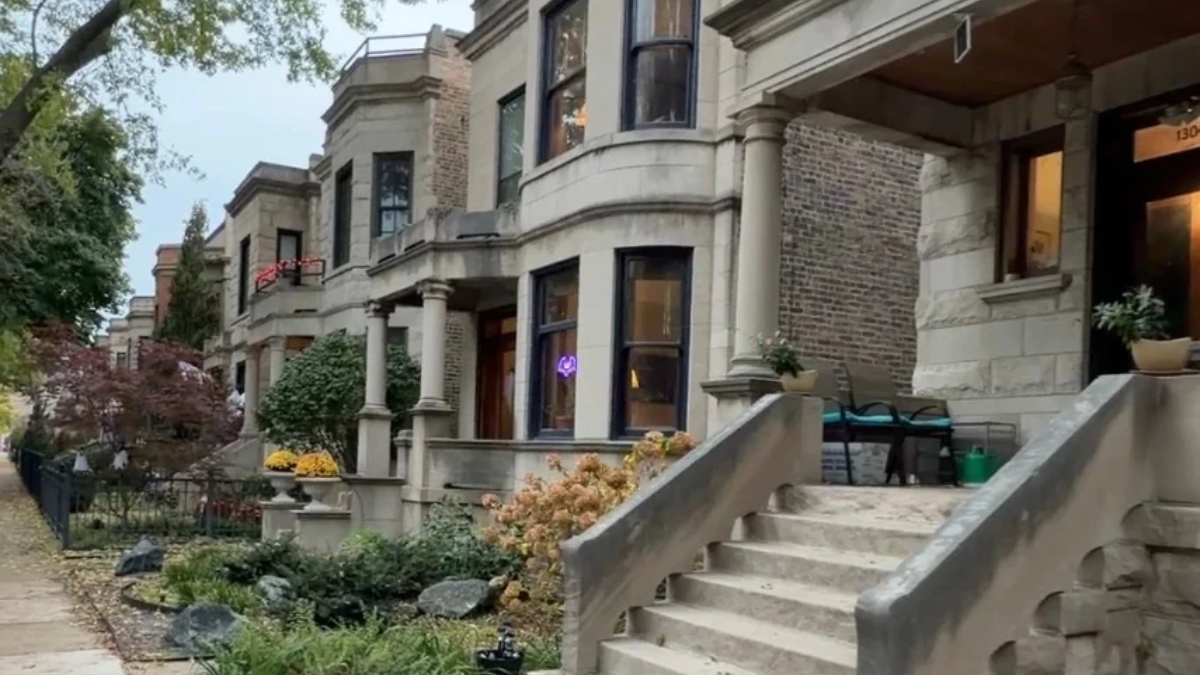
There’s a proposal to landmark the greystone blocks of Eddy, Cornelia and Newport between Racine and Southport. Some owners are for it, some are against it, and everyone wants to know the same thing: will protecting the feel of the neighborhood they fell in love with hurt their home’s value?
I didn’t want to guess, so I pulled the MLS sales. I looked at these blocks, and at a street that has already been through it: Newport Avenue east of Sheffield, which became the Newport Avenue District in February 2005.
The short answer
On the Lakeview streets I studied, landmarking did not lower values. Buildings on landmarked Newport have grown about as fast as the rest of Lakeview for almost 20 years, and they held up better in the 2008 downturn. The real risk is narrower: it falls on owners whose building is worth less than the land under it.
How values moved, 2007 to today
| Two- to four-unit buildings | 2007 to 2008 | 2024 to 2026 | Change |
|---|---|---|---|
| Newport, 800 to 1000 W (landmarked 2005) | about $925,000 | about $1,500,000 | +62% |
| All of Lakeview (MRED median) | $815,000 | $1,365,000 | +67% |
| Eddy, Cornelia and Newport, Sheffield to Southport (not landmarked) | $865,000 | $1,350,000 | +56% |
Source: MRED closed sales and InfoSparks. Lakeview figures are rolling 12-month medians for January 2008 and October 2026. Street figures are typical sale prices for each period. The south side of Newport west of Sheffield, which backs up to the CTA tracks, is not included.
The landmarked street kept pace with Lakeview, and it grew a little faster than the unlandmarked blocks just to the west. It also kept the premium it had in 2007: Newport buildings still sell for about 10% more than the typical Lakeview two- to four-unit building.
The 2008 downturn tells the same story. The Lakeview median for these buildings fell about 34% by mid-2011. Landmarked Newport buildings that sold during those years brought $686,000 to over $1,000,000, well above the neighborhood median at the time.
What’s happening on Eddy, Cornelia and Newport right now
- Since 2024, two- and three-unit buildings between Racine and Southport have sold for about $1.15 million to $1.71 million, with a median of $1.35 million.
- Seven of those ten sales closed at or over the asking price.
- The buyers paying the most are keeping the greystone fronts and rebuilding everything behind them. The best of those conversions have sold for $2.4 million to $2.75 million, within about 10% of brand-new homes on the same streets.
- There were no vacant land sales on these three streets in almost 20 years. The one clear teardown sold as a two-unit building for $865,000 in 2018, less than the typical building on these blocks that year.
That last point matters. Landmarking mainly takes the teardown buyer out of the picture. On these blocks, that buyer hasn’t been the one paying the most.
The honest trade-off
In Lakeview, an empty lot often sells for about the same as an average two-unit building. Over the past year the Lakeview land median ran between $1.1 million and $1.4 million, though with only a handful of sales. If your building is worth less than the land under it, a builder may be your best buyer, and landmarking would take that buyer away. If your building is worth more than the land, as most on these blocks are, the data says you have far less to lose.
Research here in Chicago points the same way. A 1991 study by Schaeffer and Millerick found that the effect of designation depends on how strict the rules are. A 2017 UIC study of Chicago landmark districts found no significant overall change in values in middle- and higher-income areas, beyond less new construction.
What landmarking covers, and what it doesn’t
- Covered: what you see from the sidewalk, including the facade and roofline, and the demolition of buildings that contribute to the district.
- Generally not covered: interiors, and rear additions that can’t be seen from the street.
- Incentives: owner-occupied homes and buildings up to six units can qualify for a 12-year property assessment freeze on a major rehab, and permit fees can be waived if you apply before work starts.
Before you plan a project, confirm the details with the Chicago Landmarks Division at 312-744-3200.
A little greystone history
Chicago’s greystones get their name from their grey limestone fronts, most often Bedford limestone from south-central Indiana. Most were built between 1890 and 1930, a generation after the Great Chicago Fire pushed the city toward brick and stone. The Newport Avenue District is a mix of brick and stone-fronted buildings from 1891 to 1928, much like the blocks now being discussed.
Frequently asked questions
Does landmarking lower home values in Chicago?
Not on the Lakeview streets studied here. Landmarked Newport rose about 62% from 2007 to 2026, close to the 67% gain for all of Lakeview, and it held up better in the 2008 downturn. Owners whose building is worth less than the land carry the most risk.
Can I renovate the inside of a landmarked building?
Generally, yes. The Commission focuses on what’s visible from the street. Many of the highest sales on these blocks are greystones that were fully rebuilt inside.
Where does the proposal stand?
As of the most recent reporting, it was still being studied, and the alderman has said he wants real support from property owners before moving forward. Preservation Chicago has a timeline. If you own on these blocks, now is when your voice counts.
Curious what this means for your building?
If you own on Eddy, Cornelia or Newport, I’ll run your numbers both ways, as a home and as land, so you can make your own decision. Call me at 312-953-7811 or send me a message.
Prefer the one-page version? Download my free Insider Notes. Want more Lakeview insight? Explore my Lakeview neighborhood guide or join my newsletter.
All data from MRED. Data deemed reliable but not guaranteed. This article is for general information and is not legal or financial advice.
Maureen Moran, REALTOR® | @properties Christie’s International Real Estate | Equal Housing Opportunity. We are pledged to the letter and spirit of U.S. policy for the achievement of equal housing opportunity throughout the Nation.



Leave a Reply